

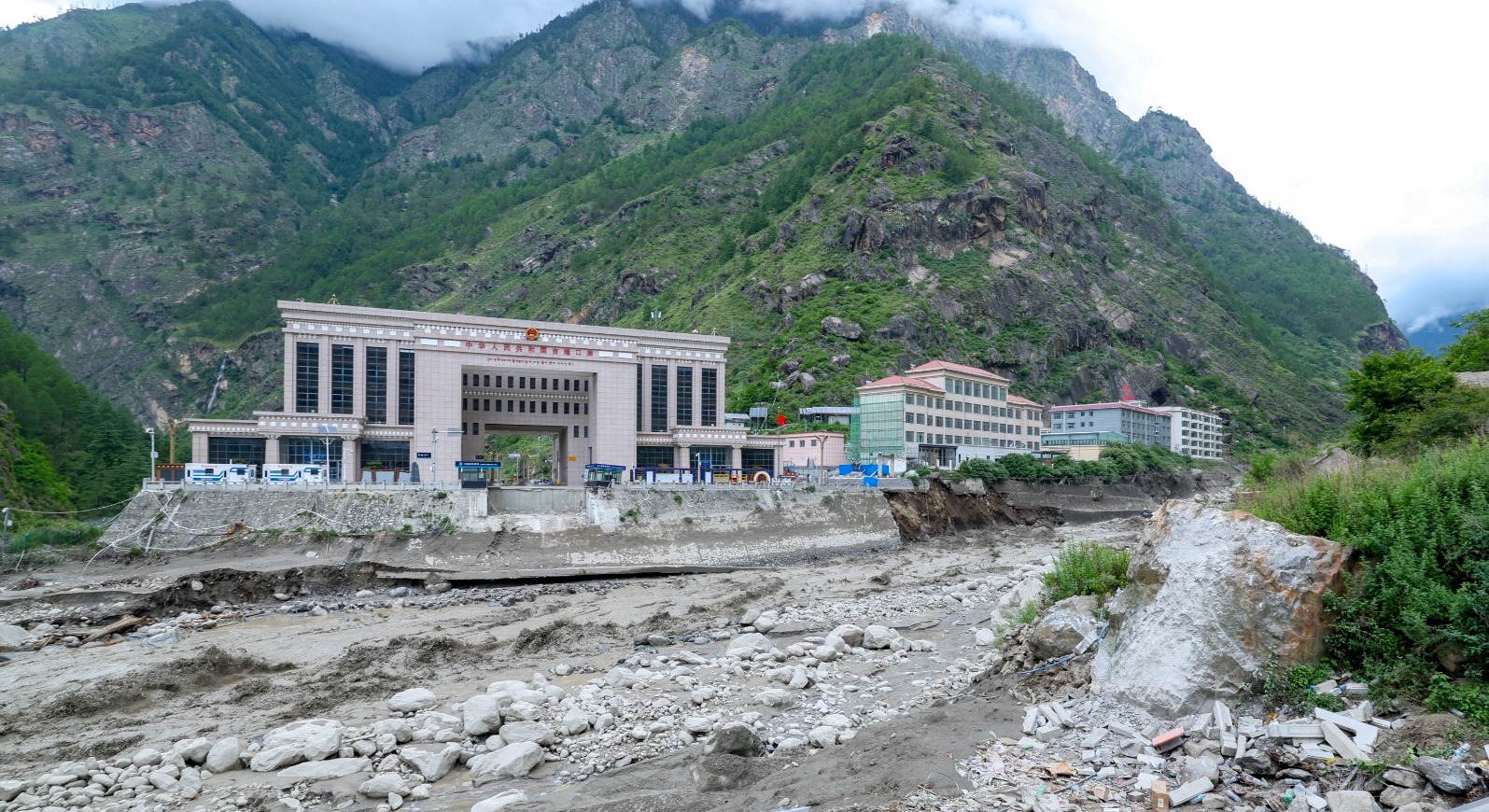
The towering peaks of the Himalayas, once considered eternal guardians of ice and snow, are now becoming harbingers of unprecedented danger. As our planet warms, glacial lakes high in these mountains are growing larger and more unstable, threatening millions of people across Nepal, China, and India. Recent devastating floods have sparked urgent cooperation between nations, but the challenges ahead are immense.
In July 2024, a catastrophic glacial lake outburst flood (GLOF) demonstrated just how vulnerable communities across international borders have become. The disaster, which originated in China’s high mountains and devastated areas in both countries, has finally pushed this critical issue onto the political agenda at the highest levels.
What Are Glacial Lake Outburst Floods (GLOFs)?
Glacial Lake Outburst Floods, commonly known as GLOFs, occur when water that has been dammed by glacial ice or debris suddenly breaks free and rushes down mountain valleys. These events can happen with little warning and carry devastating power, destroying everything in their path.
How GLOFs Form
The process typically unfolds in several stages:
- Ice dam formation: As glaciers retreat due to warming temperatures, they often leave behind natural dams made of ice, rock, or debris
- Water accumulation: Meltwater from the glacier and surrounding snow collects behind these dams, forming lakes
- Dam failure: The dam becomes unstable due to various factors including:
- Increasing water pressure
- Ice melting and structural weakening
- Seismic activity or landslides
- Wave action from falling ice or debris
- Catastrophic release: When the dam fails, millions of gallons of water surge downhill at tremendous speed
Types of Glacial Lakes
Understanding the different types of glacial lakes helps explain their varying risk levels:
| Lake Type | Formation | Risk Level | Characteristics |
| Supraglacial lakes | Form on glacier surface | High | Temporary, can drain suddenly through crevasses |
| Ice-marginal lakes | Form along glacier edges | Medium-High | Dammed by ice, vulnerable to ice dam failure |
| Moraine-dammed lakes | Blocked by rock debris | Variable | Depends on moraine stability and composition |
| Bedrock-dammed lakes | Natural rock barriers | Lower | More stable but can still overflow |
The July 2024 Disaster: A Wake-Up Call
The devastating GLOF that struck the Nepal-China border region in July 2024 serves as a stark reminder of the growing threat these events pose. Here’s what happened:
Timeline of Events
- March 2024: Small ponds began forming on the Supra glacier in China’s high mountains
- June 2024: Rapid expansion of these water bodies began
- Early July: Multiple ponds coalesced into a single massive lake covering 638,000 square meters
- July 8, 2024: The glacial dam failed catastrophically
The Immediate Impact
The flood’s destruction was swift and severe:
- Human casualties: 11 people died in Nepal, 18 remain missing; 11 were swept away in China
- Economic losses: Approximately $100 million in infrastructure damage
- Infrastructure destroyed: Roads, bridges, homes, and businesses
- Trade disruption: Cross-border commerce at Rasuwagadhi border point severely affected
- Environmental damage: Significant erosion and habitat destruction along the Bhotekoshi River
Why This Event Was Different
This GLOF was particularly significant because:
- It originated on Chinese territory but caused major damage in Nepal
- The glacial lake wasn’t on existing risk assessments
- It demonstrated how rapidly new threats can emerge
- One hour of advance warning, though minimal, still saved an estimated 200 lives
The Growing Threat: Climate Change and Glacial Instability
Climate change is fundamentally altering the Himalayan landscape, creating conditions that make GLOFs more frequent and dangerous.

Temperature Trends in the Himalayas
The Himalayan region is warming at twice the global average rate. This accelerated warming is causing:
- Rapid glacier retreat: Many glaciers are losing mass at unprecedented rates
- Permafrost degradation: Ground that has been frozen for millennia is now thawing
- Increased precipitation variability: More intense rainfall and snowfall events
- Seasonal shifts: Changes in monsoon patterns and timing
The Numbers Tell the Story
Recent assessments reveal the scope of the threat:
- 47 potentially dangerous glacial lakes identified in the Koshi, Gandaki, and Karnali river basins
- 25 high-risk lakes in Chinese territory, 21 in Nepal, and 1 on the India border
- 3 GLOFs in Nepal in just the past three months (as of the article’s writing)
- Rapid formation: New dangerous lakes can form and reach critical size within months
Why Current Risk Assessments Fall Short
The fact that recent GLOF-causing lakes weren’t on existing danger lists highlights a critical problem: the threat is evolving faster than our ability to monitor and assess it. Traditional glacial lake inventories may become outdated within a few years, or even months, as climate change accelerates.
International Cooperation: A New Chapter
The July 2024 disaster marked a turning point in regional cooperation on GLOF risks. For the first time, the issue has moved beyond technical discussions to high-level political engagement.
Historical Context
Before the recent disaster, information sharing was limited:
- Minimal cooperation: Climate data sharing was mostly restricted to Nepal’s Department of Hydrology and Meteorology and a few experts
- Language barriers: Different technical standards and communication protocols
- Political sensitivities: Border and territorial considerations complicated data sharing
- Lack of urgency: Without major recent disasters, the issue remained low priority
The Breakthrough Agreement
On August 1, 2024, in Nyalam County, Tibet, Chinese and Nepali officials reached a landmark agreement:
What Was Agreed
- Information sharing protocol on glacial lake conditions and flood risks
- Early warning system cooperation using WeChat and phone communications
- Joint monitoring efforts for high-risk lakes in the border region
- Regular coordination meetings between local authorities
Key Participants
- Chinese government and police officers from Nyalam County, Tibet
- Nepali officials from Sindhupalchok District
- District police superintendent Rameshwor Karki representing Nepal
Political Momentum Building
The disaster has elevated GLOF cooperation to unprecedented political levels:
Parliamentary Action: Bishwa Prakash Sharma, a member of parliament and general secretary of the Nepali Congress, formally demanded a three-nation information-sharing mechanism involving Nepal, China, and India.
“In the Himalayan region, many glacial lakes are in dangerous conditions. If they burst, the impact can even reach India. Collaboration among the three countries is necessary.”
Diplomatic Engagement: The Chinese embassy in Kathmandu has been approached about establishing automatic early warning stations in the Bhotekoshi areas.
Regional Implications: Plans are underway to raise GLOF cooperation during high-level talks between Nepal, China, and India.
The Science Behind Early Warning Systems
Effective GLOF early warning requires sophisticated monitoring and rapid communication networks. Understanding how these systems work helps explain why international cooperation is so crucial.
Monitoring Technologies
Satellite-Based Monitoring
- Advantages: Wide coverage, regular updates, cost-effective for large areas
- Limitations: Weather dependency, resolution constraints, time delays in processing
- Applications: Lake size tracking, ice dam stability assessment, regional trend analysis
Ground-Based Sensors
- Automatic weather stations: Monitor temperature, precipitation, and humidity
- Seismic sensors: Detect ground movement that might trigger dam failure
- Water level gauges: Track lake depth and volume changes
- Flow monitors: Measure downstream water levels and flow rates
Emerging Technologies
- Drone surveillance: Provides detailed, real-time imagery of high-risk areas
- Thermal imaging: Detects ice melting and structural changes in glacial dams
- Acoustic monitoring: Identifies sounds associated with ice cracking and water movement
- IoT sensor networks: Enable continuous, automated data collection and transmission
Communication Protocols
Effective early warning systems require robust communication networks:
- Detection: Sensors identify potential GLOF conditions
- Analysis: Data is processed to determine threat level
- Alert generation: Warnings are formulated and prioritized
- Dissemination: Alerts are sent through multiple channels
- Response coordination: Emergency services and communities take action
Success Stories in Nepal
Nepal has demonstrated that early warning systems can save lives:
The East Rapti River System
- Established: 2001 by Practical Action
- Initial technology: Basic hand phones and loudspeakers
- Evolution: Now includes advanced forecasting and mobile alerts
- Results: Dramatic reduction in flood casualties
“At that time, there were no mobile phones or advanced technology to share messages. Because floods occurred every year in the Rapti, we provided hand phones to people upstream. When it rained, they would call downstream communities, and warnings were then relayed through loudspeakers.” – Gehendra Gurung, former head of Practical Action’s programme in Nepal
Modern Capabilities
The Department of Hydrology and Meteorology can now:
- Provide 3-day advance rainfall forecasts
- Issue automated flood warnings through multiple channels
- Coordinate with international weather services
- Maintain 24/7 monitoring of high-risk areas
Challenges in Cross-Border Monitoring
While the recent cooperation agreements represent significant progress, numerous challenges remain in establishing effective cross-border GLOF monitoring.
Technical Challenges
Data Standardization
- Different measurement systems: Metric vs. imperial, various technical standards
- Language barriers: Technical terminology and communication protocols
- Equipment compatibility: Ensuring sensors and communication systems can interface
- Calibration consistency: Maintaining accuracy across different monitoring networks
Infrastructure Limitations
- Remote locations: Many glacial lakes are in extremely difficult-to-access areas
- Harsh conditions: Equipment must withstand extreme weather and temperatures
- Power supply: Reliable electricity for monitoring equipment in remote mountains
- Communication networks: Cellular and internet coverage in high-altitude regions
Political and Administrative Hurdles
Sovereignty Concerns
- Border sensitivities: Monitoring equipment and personnel access across international boundaries
- Data sharing protocols: Balancing transparency with national security considerations
- Jurisdiction issues: Determining responsibility for monitoring and response in border areas
- Resource allocation: Funding and maintaining equipment across multiple countries
Institutional Coordination
- Multiple agencies: Various departments and organizations must work together
- Different government levels: Local, regional, and national coordination requirements
- Emergency response protocols: Coordinating across different emergency management systems
- Legal frameworks: Establishing binding agreements and liability considerations
Scientific and Research Gaps
Understanding GLOF Processes
Despite decades of research, significant knowledge gaps remain:
- Trigger mechanisms: What exactly causes a stable glacial dam to suddenly fail?
- Prediction timeframes: How far in advance can we reliably predict GLOF events?
- Climate sensitivity: How will different warming scenarios affect GLOF frequency and intensity?
- Dam stability assessment: Better methods for evaluating when glacial dams are approaching failure
Research Priorities
Leading glaciologists emphasize several critical research needs:
- Improved monitoring techniques for real-time dam stability assessment
- Better predictive models incorporating climate change projections
- Enhanced remote sensing capabilities for inaccessible locations
- Standardized risk assessment protocols for international use
“There is a need for proper monitoring. If we can ensure effective monitoring, we can save human lives.” – Mohan Bahadur Chand, Himalayan glaciologist and assistant professor at Kathmandu University
Community Preparedness and Response
While high-tech monitoring systems are crucial, community-level preparedness often makes the difference between life and death when GLOFs occur.
Local Knowledge and Traditional Systems
Indigenous Monitoring
Local communities have developed sophisticated understanding of their environment:
- Seasonal patterns: Recognition of unusual weather or ice behavior
- Natural indicators: Using animal behavior, plant phenology, and local weather signs
- Historical memory: Oral traditions preserving knowledge of past flood events
- Traditional early warning: Communication systems using horns, drums, or signal fires
Integrating Traditional and Modern Systems
The most effective early warning systems combine:
- Scientific monitoring with local observations
- Technological alerts with traditional communication methods
- Expert analysis with community knowledge
- Formal protocols with flexible local responses
Community Education and Training
Risk Awareness Programs
Effective community preparedness requires:
- Understanding the threat: Education about GLOFs and their causes
- Recognizing warning signs: Training to identify natural indicators
- Emergency procedures: Clear protocols for evacuation and response
- Communication skills: Using early warning systems effectively
- Recovery planning: Post-disaster response and rebuilding strategies
Success Factors in Community Programs
Research shows that effective community preparedness programs share common characteristics:
- Local leadership: Community champions who drive preparation efforts
- Regular practice: Evacuation drills and emergency response exercises
- Multi-generational involvement: Ensuring knowledge transfer across age groups
- Cultural sensitivity: Adapting approaches to local customs and languages
- Ongoing support: Continuous training and resource provision
Economic Impacts and Recovery
GLOFs create both immediate and long-term economic consequences that extend far beyond the directly affected areas.
Direct Economic Losses
The July 2024 GLOF demonstrated the massive economic impact these events can have:
- Infrastructure damage: $100 million in immediate losses
- Agricultural losses: Destruction of crops, livestock, and farmland
- Tourism impacts: Damage to trekking routes and tourism infrastructure
- Trade disruption: Interruption of cross-border commerce
Indirect Economic Effects
The broader economic implications include:
- Supply chain disruption: Impact on regional and international trade
- Insurance costs: Increased premiums for properties and businesses in risk areas
- Development delays: Postponement of infrastructure and investment projects
- Migration pressures: Population displacement and resettlement costs
Building Economic Resilience
Strategies for reducing economic vulnerability include:
- Diversified economic base: Reducing dependence on high-risk activities
- Insurance and risk transfer: Financial instruments to spread risk
- Resilient infrastructure: Building systems that can withstand or quickly recover from GLOFs
- Emergency reserves: Financial preparations for rapid response and recovery
- Regional cooperation: Sharing economic risks and recovery resources
International Funding and Support
The scale of the GLOF threat requires substantial financial resources that exceed the capacity of individual countries, particularly developing nations like Nepal.
Current Funding Initiatives
UN Green Climate Fund
In July 2024, the UN’s Green Climate Fund approved approximately $36 million to help Nepal reduce GLOF threats through:
- Community protection programs
- Infrastructure resilience projects
- Ecosystem restoration efforts
- Capacity building initiatives
- Early warning system development
Other International Support
Various organizations provide GLOF-related assistance:
- World Bank: Infrastructure resilience and disaster risk reduction projects
- Asian Development Bank: Regional cooperation and monitoring systems
- European Union: Technical assistance and capacity building
- Bilateral aid programs: Support from countries like Japan, Germany, and Switzerland
Funding Challenges and Needs
Scale of Required Investment
Comprehensive GLOF risk reduction requires massive investment:
- Monitoring infrastructure: Hundreds of millions for comprehensive sensor networks
- Early warning systems: Ongoing operational costs for maintenance and staffing
- Community preparedness: Education, training, and local capacity building
- Research and development: Continued scientific advancement and technology improvement
- Emergency response capacity: Equipment, training, and coordination systems
Funding Gaps
Current funding falls far short of identified needs:
- Limited donor attention: GLOFs compete with other climate priorities for funding
- High upfront costs: Monitoring systems require substantial initial investment
- Ongoing maintenance: Sustained funding needed for system operation and updates
- Transboundary complications: Difficulty coordinating funding across multiple countries
Future Outlook and Emerging Technologies
The fight against GLOF risks is rapidly evolving, with new technologies and approaches offering hope for better protection.
Technological Advances on the Horizon
Artificial Intelligence and Machine Learning
AI technologies are beginning to transform GLOF monitoring:
- Pattern recognition: Identifying subtle changes in satellite imagery that precede dam failures
- Predictive modeling: Using machine learning to forecast GLOF probability and timing
- Automated analysis: Processing vast amounts of monitoring data in real-time
- Risk assessment: Continuously updating threat levels based on multiple data sources
Advanced Remote Sensing
Next-generation monitoring technologies include:
- Hyperspectral imaging: Detecting minute changes in ice and water composition
- Radar interferometry: Measuring ground movement with millimeter precision
- LiDAR systems: Creating detailed 3D models of glacial lakes and surrounding terrain
- Thermal monitoring: Tracking temperature changes that indicate ice instability
Communication and Alert Systems
Modern communication technologies enable faster, more reliable warnings:
- Satellite communication: Ensuring connectivity in remote mountain regions
- Mobile app integration: Direct alerts to smartphones with location-specific information
- Social media platforms: Rapid information dissemination through existing networks
- Multi-language systems: Automated translation for cross-border communication
Climate Change Projections
Understanding future climate scenarios helps plan for evolving GLOF risks:
Temperature Projections
Climate models predict continued warming in the Himalayas:
- 2°C warming scenario: Dramatic acceleration in glacier retreat and lake formation
- 3-4°C warming: Fundamental transformation of high-altitude ecosystems
- Tipping points: Potential for sudden, irreversible changes in glacial systems
- Seasonal shifts: Changes in precipitation patterns affecting lake formation
Impact Scenarios
Different warming levels will create varying GLOF risks:
Warming LevelLikely ImpactsTimeline1.5°CIncreased frequency of existing GLOFs2030-20402°CNew high-risk lakes form rapidly2040-20503°CFundamental shifts in glacial systems2050-20704°C+Widespread instability and mega-GLOFs2070+
Regional Cooperation Evolution
The cooperation agreements established after the July 2024 disaster are likely just the beginning:
Expanded Partnerships
Future cooperation may include:
- Trilateral agreements: Formal treaties between Nepal, China, and India
- Technical standardization: Common protocols and equipment standards
- Joint research programs: Collaborative scientific studies and monitoring
- Shared funding mechanisms: Cost-sharing arrangements for monitoring infrastructure
- Emergency response coordination: Integrated disaster response across borders
Institutional Development
New institutions may emerge to coordinate regional efforts:
- Himalayan GLOF Monitoring Center: Regional coordination hub
- Cross-border emergency protocols: Standardized response procedures
- Technical training programs: Capacity building across all participating countries
- Research collaboration networks: Shared scientific expertise and resources
Key Takeaways
Understanding and addressing the growing threat of glacial lake outburst floods requires coordinated action across multiple levels and borders. Here are the essential points to remember:
The Threat Is Real and Growing
- Climate change is rapidly increasing GLOF risks across the Himalayas
- New dangerous lakes can form within months, faster than traditional assessments can track
- Cross-border impacts mean no single country can address the threat alone
International Cooperation Is Essential
- The July 2024 disaster sparked unprecedented cooperation between Nepal and China
- Information sharing and early warning systems can save hundreds of lives
- Political commitment at the highest levels is crucial for sustained cooperation
Technology Offers Solutions
- Modern monitoring systems can provide advance warning of GLOF events
- Combination of satellite, ground-based, and emerging technologies provides comprehensive coverage
- Communication systems can rapidly alert downstream communities
Community Preparedness Saves Lives
- Local knowledge and traditional systems complement high-tech monitoring
- Community education and regular drills are essential for effective response
- One hour of advance warning prevented an estimated 200 deaths in the July 2024 event
Significant Challenges Remain
- Funding requirements far exceed current commitments
- Technical and political hurdles complicate cross-border cooperation
- Research gaps limit our ability to predict and prevent GLOFs
The Future Requires Sustained Effort
- Climate change will continue increasing GLOF risks for decades
- New technologies offer hope for better monitoring and prediction
- Regional cooperation must evolve into permanent, binding agreements
Frequently Asked Questions (FAQ)
Q: What exactly is a glacial lake outburst flood (GLOF)?
A: A GLOF occurs when water dammed by glacial ice, rock debris, or other materials suddenly breaks free and rushes down mountain valleys. These floods can release millions of gallons of water with devastating force, destroying everything in their path. They typically happen with little warning when the natural dam fails due to factors like increasing water pressure, ice melting, seismic activity, or structural weakening.
Q: How does climate change increase GLOF risks?
A: Climate change accelerates glacier retreat and increases GLOF risks in several ways: rising temperatures cause more ice melting, creating larger glacial lakes; changing precipitation patterns can increase water accumulation; permafrost degradation weakens natural dams; and rapid temperature fluctuations create instability in ice formations. The Himalayas are warming at twice the global average, dramatically accelerating these processes.
Q: Why is international cooperation necessary for GLOF monitoring?
A: GLOFs don’t respect political boundaries. Many glacial lakes are located in one country but their outburst floods affect downstream communities in neighboring countries. The July 2024 disaster, for example, originated in China but caused major damage in Nepal. Effective early warning requires monitoring the source lakes and sharing information across borders, which is impossible without international cooperation.
Q: How effective are early warning systems for GLOFs?
A: Early warning systems can be highly effective when properly implemented. In the July 2024 Nepal-China border flood, just one hour of advance warning prevented an estimated 200 deaths. Nepal’s early warning systems on rivers like the East Rapti have dramatically reduced flood casualties. However, effectiveness depends on proper monitoring infrastructure, reliable communication systems, and well-prepared communities.
Q: What technologies are used to monitor glacial lakes?
A: GLOF monitoring uses a combination of technologies: satellite imagery tracks lake size and changes over time; ground-based sensors monitor water levels, temperature, and seismic activity; automatic weather stations provide environmental data; and emerging technologies like drones, thermal imaging, and AI-powered analysis enhance monitoring capabilities. However, ground-based monitoring in remote mountain regions remains challenging and expensive.
Q: How many glacial lakes pose threats in the Himalayas?
A: A 2020 UN-backed report identified 47 potentially dangerous glacial lakes in the Koshi, Gandaki, and Karnali river basins across Nepal, China’s Tibet region, and India. Of these, 25 were in Chinese territory, 21 in Nepal, and one on the India border. However, recent GLOFs have involved lakes not on this list, suggesting the actual number of threatening lakes may be much higher and growing rapidly.
Q: What can communities do to prepare for GLOFs?
A: Communities can take several preparedness steps: learn to recognize natural warning signs like unusual sounds from glacial areas, participate in evacuation drills and emergency planning, establish communication networks for rapid alert dissemination, identify safe evacuation routes and locations, maintain emergency supplies and evacuation kits, and integrate traditional knowledge with modern early warning systems. Community education and regular practice are essential for effective response.
Q: How much does GLOF damage cost?
A: GLOF damage costs can be enormous. The July 2024 Nepal-China border flood caused approximately $100 million in immediate infrastructure damage, not including long-term economic impacts like trade disruption and recovery costs. These figures typically include destruction of roads, bridges, homes, agricultural land, and tourism infrastructure, plus indirect costs from business interruption and population displacement.
Q: What international funding is available for GLOF risk reduction?
A: Several international funding sources support GLOF risk reduction: the UN Green Climate Fund approved about $36 million for Nepal’s GLOF reduction efforts in 2024; the World Bank, Asian Development Bank, and European Union provide various assistance programs; and bilateral aid from countries like Japan, Germany, and Switzerland supports monitoring and preparedness projects. However, current funding falls far short of the estimated needs for comprehensive risk reduction.
Q: Will GLOF risks continue to increase in the future?
A: Yes, GLOF risks will likely continue increasing for decades due to ongoing climate change. Even if global warming is limited to 1.5°C above pre-industrial levels, the Himalayas will continue experiencing glacier retreat and new lake formation. Higher warming scenarios could lead to fundamental transformations of glacial systems and much more frequent, larger GLOFs. This makes immediate action on monitoring, cooperation, and preparedness even more critical.
This comprehensive guide synthesizes current knowledge about glacial lake outburst floods in the Himalayas, international cooperation efforts, and emerging solutions. For the most current information on specific risks and preparedness measures in your area, consult local disaster management authorities and meteorological services.

Leave a Reply