

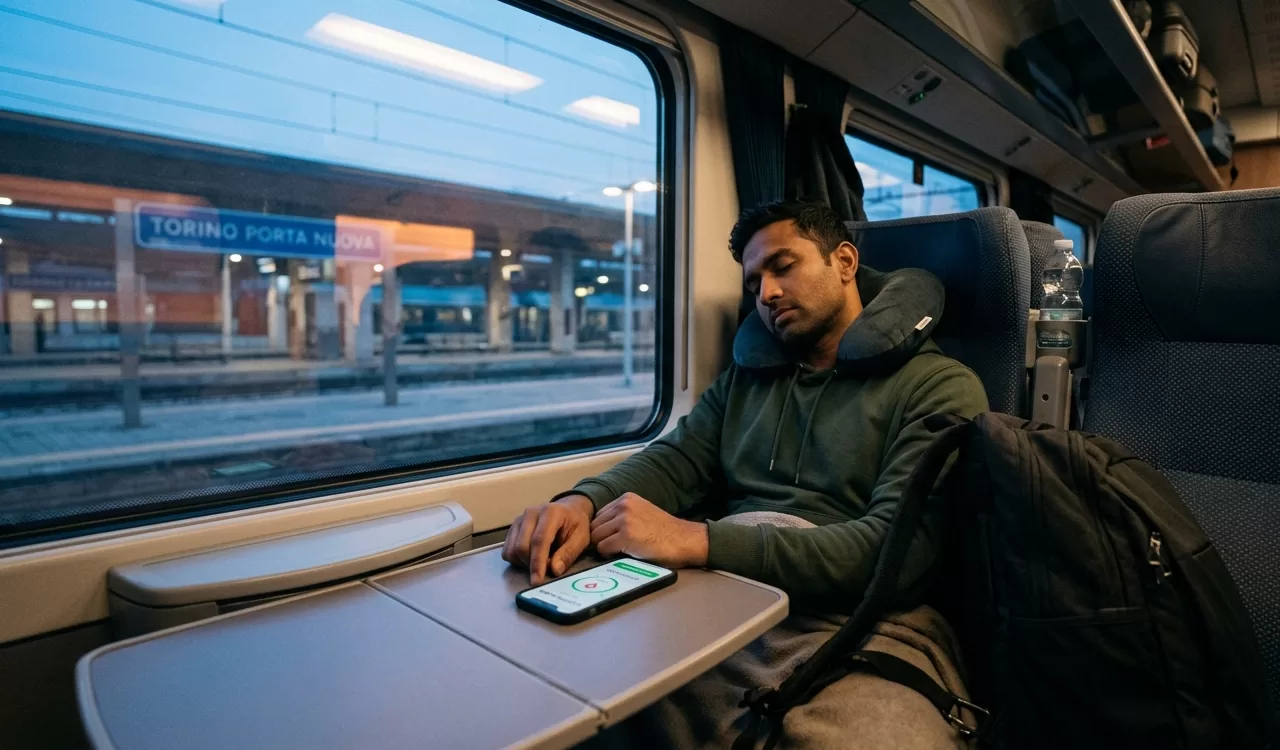
As a frequent traveler based in Turin, Italy, I have spent years navigating the cross-border night bus and rail networks of Europe. For a long time, I struggled with “transit anxiety”—that nagging hyper-vigilance that prevents deep REM sleep.
Traditional time-based alarms are fundamentally flawed in transit; if your train is delayed by two hours, a standard alarm simply robs you of two hours of potential rest. Through extensive field testing on Trenitalia and FlixBus routes, I’ve refined a protocol that prioritizes both physical security and cognitive peace of mind.
Quick Reference: Night Transit Security & Sleep Protocol
| Feature | Time-Based Alarms | Location-Based (GPS) Alarms |
|---|---|---|
| Delay Accuracy | Poor (Triggers at fixed time) | High (Triggers at physical location) |
| Sleep Quality | Low (Frequent “check-ins”) | High (Deep sleep until arrival) |
| Battery Impact | Negligible | Moderate (Requires GPS optimization) |
| Theft Prevention | N/A | Essential (Physical tethering required) |
How Do I Stop Worrying About Missing My Stop?
The most effective way to eliminate destination stress is to decouple your wake-up call from the clock.
1. Implement a Geofenced Location Alarm
The “Location Alarm” (or GPS alarm) is the gold standard for transit. Instead of guessing when you’ll arrive, you drop a pin on your destination and set a proximity radius. * Why it works: If your bus is stuck in traffic or a train is held at a siding, the alarm remains silent. You gain exactly as much sleep as the journey allows.
- Pro-Tip: Set your radius to 5–10 kilometers out. This gives you enough time to shake off sleep inertia, gather your belongings, and check the platform details.
2. Optimize for Battery and Simplicity
Many GPS apps are overly complex and drain mobile batteries—a traveler’s nightmare. Look for a lightweight tool where you can simply drop a pin and go. In my experience, the best utility is one that runs efficiently in the background without requiring constant screen-on time.
What is the Safest Way to Sleep with Luggage on a Bus?
Physical security is the second pillar of reducing transit anxiety. You cannot sleep if you are worried about your “valuables” walking off at an intermediate stop.
- The “Anchor” Method: Never leave your bag loose. Always loop your backpack strap through your leg or arm while seated.
- Tactile Awareness: By tethering yourself to your luggage, any significant movement of the bag will immediately wake you through tactile feedback.
- Orientation: Keep zippers facing toward your body or the wall of the vehicle, making it nearly impossible for a “grab-and-go” theft to occur while you are unconscious.
Key Takeaways for Solo Travelers
- Audit your Tech: Use a GPS-based alarm to account for the high probability of transit delays.
- Secure your Gear: Physical tethering is a non-negotiable for solo sleepers.
- Manage Sleep Cycles: Knowing you have a fail-safe alarm allows your brain to enter deeper sleep stages, reducing the “post-bus” fatigue common in budget travel.
By shifting your strategy from manual monitoring to automated location-alerts, you transform the night bus from a stressful endurance test into a functional part of your travel itinerary. Safe travels!

Leave a Reply