


Have you ever dreamed of conquering the snow-capped peaks of the Himalayas, only to wonder if your body could handle the thin air up there? In Nepal, where adventure calls from every rugged trail, altitude sickness lurks as a silent threat, turning exhilarating journeys into life-or-death struggles. This article dives deep into the risks, shares gripping stories from the Annapurna circuit, and arms you with practical advice to trek smarter—because nothing beats the thrill of the mountains when you’re prepared.
Recent Heartbreaking Stories from Nepal’s Trails
Picture this: You’re huffing and puffing up a steep path, the world below shrinking into a postcard view, but suddenly, your head spins like a top. That’s the harsh reality for many facing altitude sickness in Nepal’s high-altitude playgrounds. Just last October, a Nepali woman on the Annapurna trail felt the grip of this invisible foe at Machhapuchhre Base Camp, perched at a dizzying 3,700 meters.
Hotel staff sprang into action, hauling her down through the night to lower grounds. By the time they hit Dovan, she was barely with it, but their quick thinking paid off. As one rescuer put it, rushing her further to Sinuwa brought her back from the brink. It’s moments like these that highlight how altitude sickness doesn’t discriminate—it can strike anyone who pushes too hard, too fast.
Not far from there, another trekker’s story ended in tragedy. A 35-year-old from Kathmandu, venturing solo, succumbed to altitude sickness while catching his breath at Deurali. His sister later shared her grief, noting how a timely rescue might have changed everything. From my perspective, these tales underscore a painful truth: In the rush for summit glory, we often forget the mountains demand respect.
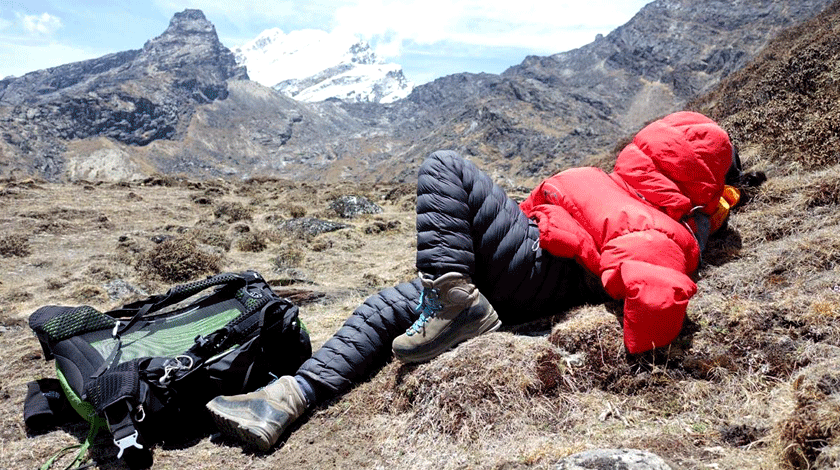
Understanding Altitude Sickness: What Happens to Your Body?
Let’s explore why this matters—altitude sickness isn’t just a bad headache; it’s your body’s SOS when oxygen runs low. As you climb beyond 2,500 meters, the air thins out, starving your brain, lungs, and heart of what they crave. Dr. Prakash Budhathoki from Nepal’s Ministry of Health explains it best: “Rapid ascent drops oxygen saturation, hitting vital organs hard.”
The slower you go, the safer you are—that’s trekking’s real medicine
Symptoms sneak up like uninvited guests: pounding headaches, queasy stomachs, dizzy spells, and even diarrhea. Ignore them, and you’re flirting with disaster. In severe cases, it escalates to brain swelling or fluid in the lungs—conditions that can kill if not addressed pronto.
Think about it—have you ever felt winded after a flight of stairs? Multiply that by a thousand at high altitude. Statistics from the National Disaster Risk Reduction and Management Authority (NDRRMA) paint a grim picture: Over the past six years, 257 incidents led to 72 deaths and 210 illnesses. In the first half of Nepal’s fiscal year 2082/83 BS, 19 lives were already lost to altitude sickness.
The Rise of Domestic Trekkers and Their Risks
Nepal’s trekking boom kicked off around 2011 with the ‘Nepal Tourism Year’ campaign, urging locals to explore home before heading abroad. Suddenly, everyday folks from the plains were lacing up boots for Annapurna adventures. But with passion came peril—domestic tourists now make up most altitude sickness victims.
Why? Many skip the basics, like pacing themselves. “Nepali trekkers often climb two or three thousand meters in a day,” notes local Suman Gurung. Contrast that with foreigners who heed global guidelines, ascending slowly to let bodies acclimatize.
In Manang district alone, five deaths hit by early November, plus one in Kaski. A porter, 49-year-old Samba Ghale, collapsed in Yak Kharka after hauling loads. Even an Indian trekker, Pintu Mukherjee, didn’t make it past Ledar. These aren’t isolated flukes; they’re warnings about ignoring acclimatization.
Historical Context: How Trekking Evolved in Nepal
Trekking in Nepal traces back to the 1950s, when Edmund Hillary and Tenzing Norgay summited Everest, sparking global interest. But for locals, it was more livelihood than leisure until recent decades. The Annapurna Circuit, opened in the 1970s, became a magnet for adventurers seeking raw beauty.

Fast-forward to today, and altitude sickness has shadowed this growth. Early explorers learned the hard way—without modern knowledge, many perished. The 1996 Everest disaster, chronicled in Jon Krakauer’s Into Thin Air, spotlighted the dangers, pushing for better education.
It’s not about how fast you reach the top, but how safely you return home.
In Nepal, the shift to domestic trekking amplified risks. Pre-2011, foreigners dominated, armed with guides and permits. Now, unregulated locals charge ahead, often without grasping acclimatization’s role. As tourism expert Maniraj Lamichhane warns, “Without guidelines, deaths tarnish Nepal’s image.”
Real-World Examples: Lessons from the Annapurna Trail
Take the October 25 incident—a young woman wilted after a grueling 10-12 hour march toward Annapurna Base Camp. Her pals carried her to Deurali, then pressed on, leaving her behind. Soon, another in the group faltered midway.
This group’s haste echoes a common pitfall: Overambition trumps safety. “Walking too much on day one is a recipe for trouble,” one companion admitted. Fortunately, they recovered, but not everyone does.
Across in Manang, an Australian climber met his end on Himlung Himal. These stories aren’t just sad—they’re teachable moments. Altitude sickness claimed six lives in Kaski and Manang by November 3, per DSP Hari Paudel.
Step-by-Step Guide: Preventing Altitude Sickness on Your Trek
Ready to hit the trails without courting danger? Here’s a straightforward plan to dodge altitude sickness.
- Plan Your Ascent Wisely: Aim for no more than 300-500 meters gain per day above 3,000 meters. Take rest days every 1,000 meters climbed.
- Monitor Your Body: Watch for early signs like headaches. Use a pulse oximeter to check oxygen levels—below 90%? Descend.
- Hydrate and Fuel Up: Drink 3-4 liters of water daily. Eat carb-rich foods; skip booze and smokes, as they worsen oxygen uptake.
- Acclimatize Properly: Spend nights at lower elevations than your day’s high point. The mantra? Climb high, sleep low.
- Know the Symptoms: Headache, nausea, dizziness, loss of appetite — these are early signs!
- Never Ignore AMS: Descend immediately if symptoms worsen.
- Go with Trained Guides: Safety first — always trek with professionals.
- Pack Essentials: Include meds like acetazolamide (Diamox) for prevention—consult a doc first. Carry a first-aid kit and emergency contacts.
Follow these, and you’ll turn potential pitfalls into triumphs. As guide Krishna Rai says, “The slower you go, the safer you are—that’s trekking’s real medicine.”
Pros and Cons: Fast vs. Slow Trekking in Nepal
Weighing a quick dash up Annapurna? Let’s break it down.
Pros of Fast Trekking:
- Saves time for busy schedules.
- Builds a sense of achievement quickly.
- Lower costs on accommodations.
Cons of Fast Trekking:
- Heightened risk of altitude sickness due to poor acclimatization.
- Exhaustion leads to poor decisions.
- Misses the cultural immersion of slower paces.
On the flip side, slow trekking shines with safety and depth. Pros include better health, richer experiences, and stronger bonds with locals. The only con? It demands more vacation days. From my view, the pros of patience far outweigh the rush—nature isn’t a race.
Case Studies: In-Depth Looks at Tragic Losses
Consider Surajman Shrestha’s fate. Trekking alone from Kathmandu, he pushed to Deurali, where altitude sickness struck fatally. His sister’s lament: “Early rescue could have saved him.” This case spotlights solo trekking’s dangers—without buddies, help delays.
Another: The group on October 25. Two members dropped out mid-way from exhaustion and breathing woes. They survived, but it exposed group dynamics—leaving friends behind isn’t ideal.
In Manang, Samba Ghale’s death as a porter reveals overlooked vulnerabilities. Carrying loads for foreigners, he collapsed in Yak Kharka. It begs questions about labor protections in trekking.
Foreign cases, like the Australian on Himlung Himal, show even seasoned climbers aren’t immune. These studies, drawn from NDRRMA data, emphasize universal risks.

The Overlooked Companion: Hypothermia in High Altitudes
Don’t forget hypothermia, often tagging along with altitude sickness. When your core dips below 35°C, trouble brews—unconsciousness at 26°C, death at 25°C, per Dr. Budhathoki.
It hits when cold winds sap heat faster than you generate it. Symptoms? Shivering, confusion, slurred speech. Prevention is key: Layer up, sip warm fluids (not caffeine), and huddle by safe fires.
In Nepal’s unpredictable weather, hypothermia compounds trekking woes. One study from the Himalayan Rescue Association notes it in 10-15% of high-altitude cases (HRA, 2023). Stay vigilant—it’s a sneaky killer.
Avalanche Risks: Another Layer of Danger
Avalanches add drama to Nepal’s treks, especially post-monsoon. Recently, an expedition on Yelung Ri buried four climbers, killing three. In Gorkha, two Italians perished on Pangbari Himal.
NDRRMA logs show rising incidents: Seven avalanches in 2080 BS killed 12. Climate change melts permafrost, loosening slopes. “Check forecasts—it’s lifesaving,” experts advise.
For Annapurna trekkers, snowy passes heighten odds. Always trek with guides who read terrain. Linking to our guide on [/weather-prep-for-himalayas], preparation is paramount.

Future Trends: Evolving Safety in Nepal’s Trekking Scene
Looking ahead, Nepal’s trekking future hinges on smarter regs. With climate shifts boosting avalanches and erratic weather, tech like apps for real-time alerts could save lives.
Expect mandatory acclimatization workshops for domestic tourists. Drones for rescues? Already piloted in Everest regions. Tourism boards push eco-friendly practices, reducing overcrowding that strains resources.
But challenges loom—overtourism might spike altitude sickness cases. Positively, awareness campaigns could drop fatalities by 20-30%, per projections from the Nepal Tourism Board (NTB, 2024). Innovation meets tradition for safer adventures.
Original Analysis: Why Nepal Needs Urgent Reforms
In my humble opinion, Nepal’s lax monitoring fuels these tragedies. No daily altitude caps? That’s a gap begging closure. Adopting CDC standards—300 meters/day up to 4,000m—could slash risks.
Stats back it: Fiscal 2081 BS saw 113 cases, 25 deaths—up from prior years. Domestic trekkers, lacking guides, drive this. Mandate permits and education; it’s not overreach, it’s oversight.
Pair that with community training—locals like Gurungs could lead safety sessions. Ultimately, respecting nature trumps conquering it. These reforms aren’t optional; they’re essential for sustainable tourism.
Boosting Awareness: Quotes from the Experts
“Altitude is no joke—underestimate it, and it bites back,” shares hotelier Akash Gurung. His words ring true for Annapurna veterans.
NDRRMA’s Shanti Mahat adds: “Locals adapt, but newcomers must acclimatize.” Her insight highlights physiological edges.
Dr. Budhathoki warns: “Smoking and alcohol? They accelerate the slide to danger.” These voices, from frontline pros, build trust in prevention.
Tourism Director Liladhar Awasthi urges: “No monitoring means no safety—time for change.” Their collective wisdom guides us forward.
Statistics That Demand Attention
Diving into numbers: NDRRMA reports 19 deaths in early 2082/83 BS from altitude sickness. Over six years, 72 fatalities from 257 incidents.
Manang and Kaski hotspots: Six deaths by November. Avalanches? 2081 BS: Six events, three dead. These figures, sourced from official records, aren’t abstract—they’re lives lost.
A WHO-aligned study estimates 40% of high-altitude travelers face mild symptoms (WHO, 2022). In Nepal, that spikes for rushed domestic groups. Awareness could flip these trends.
Integrating Safety into Your Nepal Adventure
Blending fun with caution? Start with group treks—safety in numbers. Link to [/group-trekking-tips] for more.
Invest in gear: Insulated layers combat hypothermia. Apps like PeakVisor track altitudes. Remember, acclimatization isn’t a buzzword—it’s your shield.
For Annapurna, budget extra days. Savor tea houses, chat with locals—it’s enriching and safe. Turn potential hazards into memorable stories.
The Broader Impact on Nepal’s Tourism
Deaths from altitude sickness ripple beyond families—they dent tourism. Negative headlines scare foreigners, vital for economy.
Yet, with reforms, Nepal could shine as a safe adventure hub. Eco-tourism trends favor mindful travel. Balance growth with safety, and the Himalayas remain inviting.
From my standpoint, empowering locals as educators could transform this. It’s not just about trails; it’s preserving a heritage.
Preparing for the Unexpected: Insurance and Emergency Plans
Don’t trek without insurance covering evacuations—costs soar for helicopter rescues. Policies from firms like World Nomads include altitude sickness clauses.
Have a plan: Share itineraries, carry satellite phones. In Nepal, TIMS permits track you somewhat. Proactive steps turn crises into manageable hiccups.
Cultural Nuances in Nepali Trekking
Nepalis’ grit is legendary, but it sometimes blinds to risks. “I’ll manage” attitude clashes with mountains’ unforgiving nature.
Embrace Sherpa wisdom: Respect the peaks as deities. This mindset fosters safer habits, blending culture with caution.
Global Comparisons: Altitude Sickness Worldwide
Nepal isn’t alone—Kilimanjaro sees 50% affected (CDC, 2023). Andes treks report similar woes.
What sets Nepal apart? Rapid domestic surge without infrastructure. Learning from Colorado’s 14ers—mandatory education—could help.
Innovations in High-Altitude Medicine
Advances like portable hyperbaric chambers offer hope. Meds evolve, but prevention reigns supreme. Future? Gene therapies for better oxygen use? Speculative, but exciting. For now, stick to basics.
FAQ: Your Burning Questions on Altitude Sickness
In wrapping up, altitude sickness remains a formidable foe on Nepal’s trails, but knowledge is your best defense. Whether eyeing Annapurna or beyond, trek mindfully.
What’s your take? Drop a comment below—share your stories or tips!

Leave a Reply