

In the serene hills just outside Kathmandu, a groundbreaking architectural project seamlessly fuses ancient spiritual symbolism with cutting-edge sustainable design. The Mahamudra Meditation Centre, designed by Nepalese architecture studio Abari, is more than just a place for contemplation; it’s a testament to the potential of local materials, vernacular techniques, and profound cultural narratives in modern architecture.
This deep dive explores the centre’s stunning mandala-shaped bamboo truss, its philosophical underpinnings, and why it represents a significant shift towards culturally-grounded and eco-conscious building practices. Let’s unravel the layers of this architectural marvel.

An Overview of the Mahamudra Meditation Centre
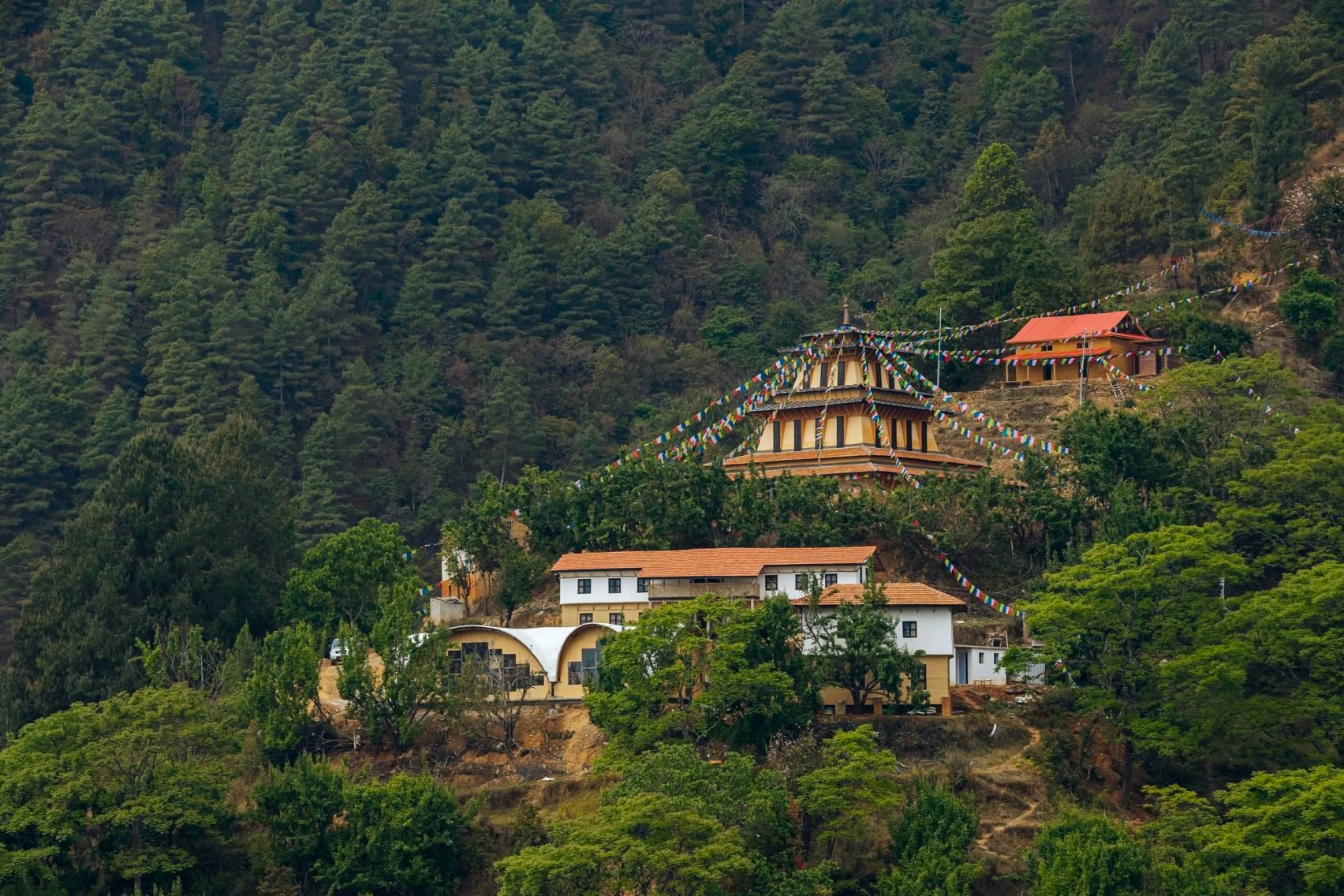
Perched on a mountain summit an hour’s drive from Kathmandu, the Mahamudra Meditation Centre is a sanctuary designed in collaboration with Tibetan Buddhist master Chogyal Rinpoche. The complex comprises three main structures:
- The Main Meditation Hall: The crown jewel, featuring the iconic mandala-shaped bamboo truss.
- A Dining Hall: Featuring undulating bamboo arches and geometric windows.
- A Guest House: A more conventional gabled structure providing accommodation for visitors.
The project was spearheaded by Abari, a Nepal-based architecture studio founded by Nripal Adhikary in 2006. Abari’s entire philosophy is dedicated to promoting sustainable and vernacular building techniques, making them the perfect visionaries for this spiritually significant project.

The Heart of the Design: The Mandala Bamboo Truss
The most breathtaking feature of the main hall is its structural core: a large, load-bearing truss constructed entirely from bamboo and shaped into the sacred form of a mandala.
What is a Mandala?
In Buddhism and Hinduism, a mandala is a complex, symmetrical geometric figure that represents the universe, unity, and harmony. It is a spiritual and ritual symbol, often used as a tool for meditation and focusing attention. By translating this symbol into a structural element, Abari moved beyond decoration and embedded spiritual meaning into the very bones of the building.

The Engineering Marvel
This isn’t merely a symbolic gesture; it’s a feat of engineering.
- Material: The use of bamboo, a fast-growing, incredibly strong tensile material, is central to the design. Nepal has a rich tradition of bamboo construction, and Abari leverages this local expertise to its fullest.
- Structure: The truss rises from 12 rammed-earth piers that form the base of the hall. This number is often significant in Buddhist cosmology. The bamboo members connect and support each other in a radial pattern, efficiently distributing the weight of the terracotta-tiled and copper-paneled roof above.
- Function Meets Form: The mandala truss is the primary reason the central meditation space can be a vast, open, and column-free room spanning 15 meters in height. This creates an unobstructed, awe-inspiring environment perfect for meditation and gathering.
As Nripal Adhikary, Director of Abari, told Dezeen: “Above, bamboo trusses unfold in the geometry of a mandala, aligning structure with spiritual meaning.”

A Contemporary Reinterpretation of the Stupa
For the main hall’s overall form, Abari looked to the stupa—an ancient Buddhist domed shrine that originated in India. As Buddhism spread across Asia, the stupa evolved into the tiered pagoda style familiar in Nepal, Tibet, China, and Japan.
Abari’s design is a contemporary homage to this history. The hall’s three-tiered silhouette instantly recalls a pagoda, but its materiality and construction are distinctly modern and local. This approach respectfully anchors the building in a millennia-old tradition while boldly expressing a renewed, sustainable future for that tradition.
“The stupa-like silhouette, reinterpreted through contemporary materials, anchors the building in Buddhist tradition while signalling renewal,” Adhikary explained.

The Symphony of Sustainable and Natural Materials
Abari’s commitment to vernacular architecture is showcased in its meticulous material selection, prioritizing local, natural, and low-carbon options.
| Material | Application | Benefits & Significance |
|---|---|---|
| Bamboo | Primary structural truss, roof framing, dining hall arches. | Rapidly renewable, high tensile strength, deeply embedded in local building culture. |
| Rammed Earth | Main walls, 12 structural piers. | Excellent thermal mass (stays cool in summer, warm in winter), made from local soil, low embodied energy. |
| Clay & Lime Plaster | Hand-plastered interior and exterior finishes. | Natural, breathable materials that regulate humidity and create a healthy indoor environment. |
| Terracotta Tiles | Roof covering. | Traditional, durable, and natural roofing material. |
| Copper Panels | Cladding for upper roofs and decorative pinnacle. | Handmade by local artisans, adding a durable and beautiful handcrafted element. |
Adhikary emphasized the tactile quality of these choices: “The rammed-earth walls, made from local soil and hand-plastered with clay, create a tactile, thermally stable environment ideal for meditation.”
The use of local artisans for the copperwork, he noted, brings a “human, handcrafted touch to a building otherwise defined by elemental mass and geometry.”
The Experience of Light and Space
The architectural design actively enhances the meditative experience through the masterful manipulation of light and space.
- Filtered Light: Narrow, projecting openings on the upper two levels filter sunlight into the main hall through latticed screens. This creates a soft, dappled light effect that changes throughout the day, fostering a calm and contemplative atmosphere without the harsh glare of direct sun.
- Sunken Centre: The wooden floor of the main hall is partially sunken at its centre. This design choice helps to define the primary meditation space, making it feel intimate and grounded despite the vast volume of the room above.
- Connection to Landscape: The dining hall’s geometric pattern of rectilinear windows frames panoramic views of the Himalayan landscape, allowing practitioners to feel connected to the natural world—a core principle of Buddhist philosophy.

The Bigger Picture: Why This Project Matters
The Mahamudra Meditation Centre is more than a beautiful building; it’s a case study for the future of architecture in a climate-conscious world.
- Championing Vernacular Architecture: It proves that local, traditional building materials and techniques are not outdated but are instead sophisticated, sustainable, and deeply culturally appropriate solutions for modern needs.
- Cultural Sustainability: The project strengthens cultural identity by weaving Buddhist symbolism and traditional Nepalese craftsmanship into a contemporary design, ensuring these practices are valued and continued.
- Low-Carbon Construction: By sourcing materials locally (drast reducing transportation emissions) and using natural, renewable resources like bamboo and earth, the building has a fraction of the carbon footprint of a comparable structure made from concrete and steel.
- Biophilic Design: The extensive use of natural materials and the connection to light and landscape align with biophilic design principles, which have been shown to reduce stress and improve well-being—a perfect alignment for a meditation centre.

Key Takeaways
- Symbolism as Structure: The mandala-shaped bamboo truss is a revolutionary design where spiritual symbolism is integrated into the load-bearing structure, not just applied as decoration.
- Vernacular Innovation: Abari successfully created a contemporary building using almost exclusively local, natural, and sustainable materials like bamboo, rammed earth, and clay.
- Cultural Continuity: The design is a modern reinterpretation of the ancient stupa form, respectfully bridging Buddhist tradition and contemporary architectural language.
- Holistic Design: Every aspect of the centre, from the thermal mass of the earth walls to the filtered light and connection to the landscape, is designed to enhance the meditative experience and occupant well-being.
- A Model for the Future: This project serves as a powerful model for sustainable, culturally-sensitive, and environmentally responsible architecture worldwide.



Frequently Asked Questions (FAQ)
Q1: Who designed the Mahamudra Meditation Centre?
A: It was designed by Abari, a Nepal-based architecture studio founded by Nripal Adhikary, specializing in sustainable and vernacular design.
Q2: What is the mandala truss made of?
A: The truss is constructed entirely from bamboo, a strong, fast-growing, and renewable local material.
Q3: Why is a mandala shape significant in this design?
A: In Buddhism, a mandala represents the universe and unity. Using it as a structural form infuses the building’s core with spiritual meaning, aligning the architecture with its purpose.
Q4: What are the walls made of?
A: The walls are made of rammed earth—local soil compacted into forms—which provides excellent thermal mass and a very low environmental footprint.
Q5: How does the design help with meditation?
A: Features like the thermally stable earth walls, soft filtered light from latticed screens, the vast column-free space, and the sunken central floor all work together to create a calm, grounded, and distraction-free environment.
Q6: Is bamboo a strong enough material for a primary structure?
A: Absolutely. Bamboo has a higher tensile strength than many types of steel and is widely used in construction across Asia. When properly treated and engineered, it is an extremely durable and reliable building material.
Q7: Where is the meditation centre located?
A: It is located on a mountain about an hour’s drive from Kathmandu, Nepal.
Q8: What other buildings are on the site?
A: Besides the main hall, the complex includes a dining hall with undulating bamboo arches and a guest house built using wattle and daub techniques.
The Mahamudra Meditation Centre stands as a beacon of what is possible when architecture draws from the deep wells of culture, place, and nature. It is a humble yet profound statement that the most forward-thinking designs might just be those that look to the wisdom of the past.
The photography is by Chemi Dorje Lama.

Leave a Reply